
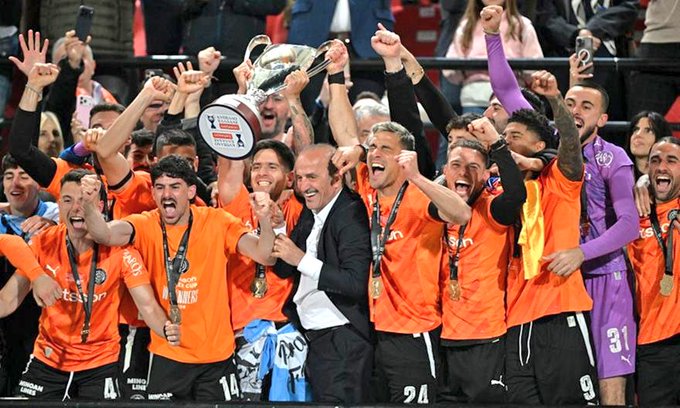
OFI's rise is not simply a story about results. It is a story about identity.
In modern football, smaller clubs rarely compete with the biggest teams by trying to replicate their resources. They compete by becoming clearer about who they are.
A team built around an idea
The first thing that stands out about OFI is the consistency of its football identity. The team does not rely on isolated moments or individual brilliance. Its structure gives players clear responsibilities in and out of possession.
That clarity becomes particularly important without the ball. Defensive distances remain compact, pressure has clear triggers and the team understands when to step forward and when to protect space.
Pressing with purpose
Pressing is not simply about running towards the ball. The best pressing teams manipulate the opponent's options before the pressure actually arrives.
OFI's structure allows the first defender to influence where the opposition can play, while the players behind him close the next available options.
The real strength of a team is often found in what happens before the ball reaches the player we are watching.
Recruitment that fits the football
Recruitment becomes more effective when the club knows exactly what it wants from each position.
Instead of simply searching for the most talented player available, the process starts with the role. What does the player need to do? What behaviours are essential? Which weaknesses can the structure protect?
This is where scouting and tactical analysis become connected. Recruitment is no longer a separate department from football identity. It becomes part of it.
Why Europe should be watching
OFI's story is interesting precisely because it offers something larger than one successful season.
It demonstrates how a club can create competitive advantage through clarity: clarity of identity, clarity of roles and clarity in recruitment.
That is what makes OFI worth watching. Not simply where the team is today, but what the underlying model could become tomorrow.